How we assessed this product
This review is desk research, not a clinical test. We read the ingredient list and product claims published on the manufacturer's official website, then looked at what is generally known about each ingredient from published nutrition and sleep research. We did not receive product samples, we did not perform any laboratory analysis, and we did not survey users.
We deliberately do not publish a star rating for supplements. A score would suggest we measured something we did not measure. Instead, the sections below set out what is verifiable about the formula and what is not, so you can judge it yourself — ideally alongside a doctor or pharmacist who knows your medical history.
Quick facts
| Product type | Liquid dietary supplement, taken before bed by dropper |
|---|
| Format | 2 fl oz (60 ml) dropper bottle |
|---|
| Ingredients | Ten: red tart cherry extract, 5-HTP, magnesium glycinate, apigenin, lemon balm extract, L-theanine, GABA, melatonin, vitamin B6 and vitamin B2 |
|---|
| Doses disclosed | One only. Melatonin is stated at 0.9 mg per serving. No amount is published for any other ingredient |
|---|
| Where it's sold | Manufacturer's official website only, with checkout handled by the seller — not in retail stores |
|---|
| Price at time of writing | List price $99 per bottle; sold in multi-bottle packages: 2 months $138 ($69 each, plus shipping), 3 months $177 ($59 each), 6 months $294 ($49 each). Verify current pricing on the official site |
|---|
| Shipping | The sales page does not state its shipping destinations or offer a country selector. Confirm delivery to your country before ordering |
|---|
| Guarantee | 60-day money-back guarantee stated by the seller and administered by the seller |
|---|
| Who should not take it without medical advice | Anyone taking medication that affects serotonin, anyone who is pregnant or nursing, anyone under 18, and anyone managing a medical condition |
|---|
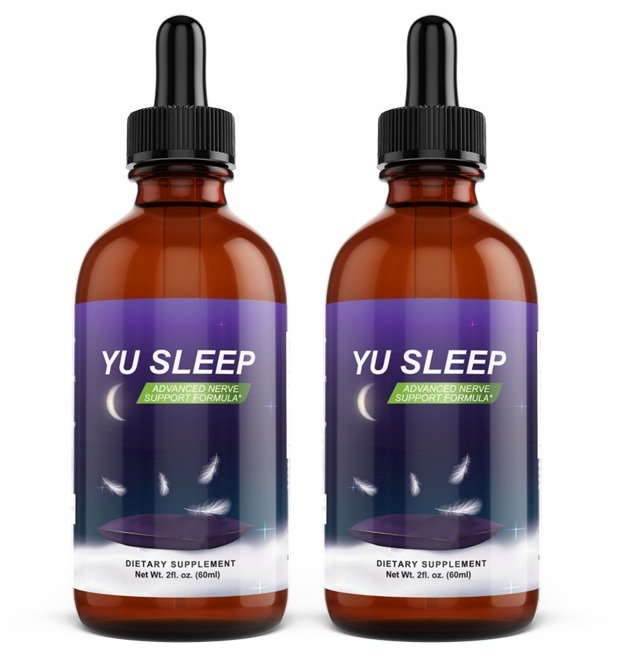
What Yu Sleep is
Yu Sleep is a nightly liquid supplement sold direct to consumers by its manufacturer. You take it before bed using the dropper. It is positioned for people whose problem is staying asleep — waking at two or three in the morning and struggling to settle again — rather than people who cannot fall asleep in the first place.
That positioning is worth taking seriously as a framing, because the two problems genuinely are different, and a lot of sleep products are built around sedation at bedtime rather than sleep continuity through the night. Whether this particular formula delivers on that framing is a separate question, and it is not one that the marketing material answers with published clinical data on the finished product.
It is a dietary supplement, not a medicine. It has not been through the approval process that a prescription sleep drug goes through, and it is not intended to diagnose, treat, cure or prevent any condition. If your sleep problem is persistent, that distinction matters a great deal — chronic insomnia and disrupted sleep can have causes that a supplement will not address, including sleep apnoea, thyroid problems, depression, and the side effects of medication you may already be taking.
The melatonin question, answered properly
This is the part of the product most likely to be misunderstood, including by pages reviewing it, so it is worth being precise.
Yu Sleep contains added melatonin at 0.9 mg per serving. That is disclosed on the manufacturer's page and it is the only ingredient amount they publish. The marketing leans heavily on tart cherry as a natural melatonin source, which is true as far as it goes — tart cherry does contain small amounts of naturally occurring melatonin — but the melatonin doing most of the work here is supplemental, not fruit-derived.
Now the part that actually matters: 0.9 mg is a genuinely low dose, and that is a point in the product's favour. Mass-market melatonin tablets commonly deliver 3, 5 or 10 mg, and the research on melatonin has been fairly consistent that more is not better — the physiological amounts your body produces are well under a milligram, higher doses are associated with next-morning grogginess and vivid dreams, and low doses have performed as well or better in trials on sleep onset.
So the honest summary: this is a low-dose melatonin product with supporting ingredients, and the low dose is a deliberate and defensible formulation choice. But it is a melatonin product. If you have been avoiding melatonin, or a doctor has told you not to take it, this is not an alternative to melatonin and you should know that before ordering.
How the formula is meant to work
Sleep is not a single switch. It runs on several overlapping systems: your circadian rhythm, your stress-hormone cycle, and the neurotransmitters involved in winding down. The Yu Sleep formula is assembled to touch a few of those at once rather than one.
The melatonin and tart cherry address the circadian side. 5-HTP feeds the serotonin pathway, and serotonin is the precursor your body converts into melatonin of its own. Magnesium glycinate, lemon balm, L-theanine and GABA are all included for the calming, wind-down side. Apigenin is there as a mild sedative. Vitamins B6 and B2 are cofactors in several of the conversions involved.
That is the mechanism as described. What we would flag: a plausible mechanism is not the same thing as a demonstrated result. The manufacturer does not publish a clinical trial of the finished Yu Sleep formula, and the studies that exist on individual ingredients generally use isolated doses under controlled conditions, not this blend. And apart from the melatonin, no ingredient amount is disclosed. Doses matter for every ingredient here, so that is a real limitation on how confidently anyone can predict an effect. Our guide on how to read a supplement label explains why.
One marketing claim we would set aside: the page describes "advanced nano-technology for 99% absorption". That is not a recognised, measurable specification for a supplement, and no absorption study is cited. Treat it as marketing language rather than a product feature.
All ten ingredients, one at a time
The manufacturer names ten. Here they are, with what each is studied for and how strong that evidence is.
Melatonin — 0.9 mg
The only disclosed amount in the formula. A hormone your body produces to signal night; supplemented here at a deliberately low dose.
Evidence note: the best-evidenced ingredient here, mainly for shortening time to fall asleep and for shifting body clock timing. 0.9 mg is closer to physiological levels than the 3–10 mg in typical tablets, and low doses generally perform as well with less next-morning grogginess. Evidence for melatonin maintaining sleep through the night is weaker than for initiating it.
Red tart cherry extract
A fruit extract containing naturally occurring melatonin and anthocyanins. The ingredient the marketing is built around.
Evidence note: small human studies on tart cherry juice have reported modest improvements in sleep time and efficiency, mostly in older adults. Sample sizes are small and results are not consistent. The melatonin contributed by cherry is a fraction of the 0.9 mg added separately.
5-HTP
An amino acid derivative the body converts into serotonin, which is in turn a precursor to melatonin.
Evidence note: research on 5-HTP for sleep is limited and often combined with other compounds, making it hard to isolate. This ingredient carries the most significant interaction risk in the formula — see the safety section below before considering it.
Magnesium glycinate
Magnesium bound to the amino acid glycine. Chosen for absorption and gentleness on the stomach.
Evidence note: magnesium shows the clearest benefit in people who are actually deficient. In people with adequate levels, the effect on sleep quality is much less established. A blood test tells you more than a label does.
L-theanine
An amino acid found in tea leaves, associated with a calm-but-alert state rather than sedation.
Evidence note: one of the better-supported calming ingredients. Trials at roughly 200–400 mg have shown modest reductions in stress markers and some improvement in sleep quality, particularly in people whose sleep is disrupted by a busy mind. Amount here is undisclosed, and the effect is dose-dependent.
GABA
The brain's main inhibitory neurotransmitter, included on the logic that more of it should mean more calm.
Evidence note: the weakest ingredient in the formula on mechanistic grounds. Oral GABA crosses the blood-brain barrier poorly, so whether a swallowed dose reaches the brain at all is genuinely disputed. Some small trials report relaxation effects, possibly via the gut rather than directly. We would not count on it.
Apigenin
A plant flavonoid found in chamomile and parsley, often described in marketing as a mild natural sedative.
Evidence note: most of the supporting research is preclinical — cell and animal studies. Human trials at supplement doses are sparse. Treat the "gentle sedative" description as a hypothesis rather than a finding.
Lemon balm extract
A herb from the mint family with a long history of traditional use for restlessness and nervous tension.
Evidence note: a handful of small trials suggest possible effects on anxiety-related restlessness. Evidence specific to sleep continuity is thin, and traditional use is not the same as clinical proof.
Vitamin B6 and B2
Two B vitamins that act as cofactors in the pathways converting tryptophan through serotonin to melatonin.
Evidence note: these are supporting nutrients, not sleep agents. Supplementing them helps if you are short of them; if your intake is already adequate, additional B vitamins are unlikely to change your sleep. High-dose B6 over long periods can cause nerve problems, which is a reason to want the amount disclosed.
The honest summary of the evidence
This is a sensibly built formula. Low-dose melatonin and L-theanine are two of the better-evidenced ingredients in the whole sleep category, and combining them with magnesium glycinate and calming botanicals is a coherent approach rather than a random list. But there is no published clinical trial of this specific product, only one of ten amounts is disclosed, GABA is unlikely to be doing much, and the individual ingredient evidence ranges from decent to preliminary. It may help some people and do nothing for others, and there is no reliable way to know in advance which group you fall into.
Who this is for — and who should skip it
Rather than publish testimonials, which we cannot verify, here is a straightforward read on fit.
Might be worth considering if
- Your sleep is broadly functional but has become lighter or more interrupted with age or stress
- You want a low melatonin dose rather than the 3–10 mg in most drugstore tablets
- Your sleep is disrupted by a busy mind, which is where L-theanine has the most support
- You have already dealt with the obvious factors — caffeine timing, alcohol, screen exposure, an irregular schedule, a too-warm bedroom
- You take no medication that interacts with serotonin, and you have checked this with a pharmacist
Skip it, or speak to a doctor first, if
- You take any prescription medication that affects serotonin — this is the important one, and a pharmacist can tell you in a minute whether yours does
- You have been advised to avoid melatonin, or you are on blood thinners or medication for seizures or blood pressure — melatonin interacts with all three
- You are pregnant, nursing, or under 18
- You snore heavily, wake gasping, or feel exhausted despite long nights — get assessed for sleep apnoea rather than supplementing
- Your sleep problem arrived alongside low mood, anxiety or a life change — that needs addressing directly
- You want a guaranteed or immediate result. No supplement offers that, and this one does not either
- The cost of a multi-month package would be a strain. There is no evidence base here that justifies financial stress
Safety and drug interactions — please read this part
The 5-HTP is the main reason this section exists, and it is not a formality.
5-HTP and serotonin. 5-HTP raises serotonin. Combining it with other things that raise serotonin can, in rare cases, contribute to serotonin syndrome, which is a serious medical condition. This affects a wide range of commonly prescribed medication, including treatments for depression and anxiety, migraine treatments, some prescription pain medication, certain cough remedies, mood stabilisers, some medication for Parkinson's, and a number of herbal mood supplements. We deliberately do not publish a list of drug names here, because the only list that matters is the one you actually take — and a pharmacist can check it against these ingredients in a couple of minutes.
Melatonin. Even at 0.9 mg, melatonin has documented interactions: it can increase bleeding risk with blood-thinning medication, may affect seizure threshold in people with epilepsy, can add to the effect of blood pressure medication, and interacts with some medication for depression and anxiety and with medication that suppresses the immune system. It also causes drowsiness — do not drive after taking it.
Magnesium. Can interact with certain antibiotics and with medication for osteoporosis, and can cause loose stools at higher intakes.
Alcohol and sedatives. Several ingredients here are mildly sedating. Treat the combination with alcohol, prescription sedatives or prescription sleep medication with care.
If you take any prescription medication at all, show the full ingredient label to your doctor or pharmacist before your first dose. A pharmacist will check this in a couple of minutes, free of charge, and it is the single most useful thing you can do before trying any supplement in this category.
Pros and cons
What we liked
- The 0.9 mg melatonin dose is low and disclosed — a deliberate choice, and the right one on the evidence
- L-theanine and magnesium glycinate are sound, well-supported inclusions
- Aimed at sleep continuity rather than only sedation at bedtime
- Liquid format is easy for people who dislike swallowing capsules
- A stated 60-day money-back guarantee reduces the financial downside if it does nothing
What gave us pause
- Only one of ten ingredient amounts is disclosed
- No published clinical trial of the finished product
- The marketing frames this as a food-based alternative to melatonin when it contains added melatonin
- GABA is unlikely to contribute much given how poorly oral GABA reaches the brain
- "Nano-technology for 99% absorption" is not a verifiable specification
- Contains 5-HTP, which rules it out for a meaningful number of people on common medication
- The sales page uses considerably stronger language about results than the evidence supports, including a countdown timer and a first-night claim
- Shipping destinations are not stated on the sales page
Price and the refund policy
At the time of writing, the manufacturer gives a list price of $99 per bottle and sells Yu Sleep in multi-bottle packages: two months at $138 total ($69 per bottle, plus shipping), three months at $177 ($59 per bottle), and six months at $294 ($49 per bottle). The realistic entry cost is therefore a package rather than one bottle, which is a common structure in this category.
The seller states a 60-day money-back guarantee, described as no questions asked. Two things worth being clear about: that guarantee is offered and administered by the seller, and we have no role in refunds or influence over the outcome. And guarantee terms can change. Before you order, read the refund policy on the official site yourself, note the conditions, and keep your order confirmation.
One practical note: the sales page does not state which countries it ships to and offers no country selector. If you are outside the United States, confirm delivery to your address before paying rather than after.
Sources and further reading
Independent references we used to check the claims on this page. They describe the ingredients and interactions in general, not this specific product.
Frequently asked questions
Is it safe to take alongside my other medication?
Not necessarily, and this is the question to take most seriously. The 5-HTP raises serotonin and can interact with a wide range of prescription medication, including common treatments for depression, anxiety and migraine, some prescription pain medication, and several herbal mood supplements. The melatonin interacts with blood-thinning medication, some seizure medication, blood pressure medication and some medication for depression and anxiety. Magnesium can interfere with the absorption of certain antibiotics.
We cannot answer this for your situation and neither can the manufacturer. Take the ingredient list to your pharmacist or prescribing doctor before your first dose. If you take any serotonergic medication, the default answer is no unless a clinician tells you otherwise.
Does it contain melatonin?
Yes — 0.9 mg per serving, which the manufacturer discloses. The marketing emphasises tart cherry as a natural melatonin source, and that is true, but the cherry contributes far less than the added melatonin does.
0.9 mg is a low dose, and that is a genuine positive: most drugstore tablets contain three to ten times more, and the evidence does not support higher being better. But if you have been avoiding melatonin for any reason, this is not an alternative to it.
How long before I would notice anything?
Melatonin acts within an hour or two on the night you take it, so if anything is going to help you fall asleep faster, that part is not a slow build. The other ingredients are described as gradual, over a period of weeks.
The honest caveat: there is no established timeline for this product, because there is no published trial on it. And "give it more time" is also the standard argument used to keep people buying something that is not working. Set a limit in advance — a defined number of weeks and a clear idea of what improvement would look like — and use the refund window if you get there with nothing.
Will it leave me groggy in the morning?
Less likely than a high-dose melatonin tablet, because 0.9 mg is well below the doses most associated with next-morning grogginess and vivid dreams. That said, individual responses to melatonin, 5-HTP and any sedating ingredient vary, and we have not tested this. Do not drive or operate machinery until you know how it affects you.
Does it ship to my country?
The sales page does not say. There is no country selector and no stated list of shipping destinations, which suggests it is built primarily for the United States. If you are ordering from elsewhere, contact the seller's support and confirm delivery to your address before paying. Supplements crossing borders can also be held by customs depending on local rules, which is worth checking for your own country.
Can I buy it on Amazon or in a pharmacy?
The manufacturer states it is sold only through its own website. If you find it listed on a marketplace, we would be cautious about authenticity and about whether the seller's refund terms apply. Buying from the official site is also what makes the stated guarantee applicable.
What if it does not work for me?
The seller states a 60-day money-back guarantee, requested through their support team. Read the exact conditions on the official site before ordering, keep your order confirmation, and start the request inside the window rather than at the end of it. We are not involved in refunds and cannot process or escalate one on your behalf.
Our final take
Yu Sleep is a better-constructed formula than the marketing around it would lead you to expect. The 0.9 mg melatonin dose is the right call on the evidence, L-theanine and magnesium glycinate are sound choices, and the focus on staying asleep rather than only falling asleep addresses a real and commonly ignored problem.
What we cannot tell you is whether it will work for you. There is no trial of the finished product, nine of ten amounts are undisclosed, and the sales page oversells — a countdown timer, a claim about the first night, and framing that implies this is an alternative to melatonin when it contains melatonin. The 5-HTP also makes it unsuitable for anyone on serotonergic medication without medical clearance, which is a larger group than most sleep supplement pages acknowledge.
If your sleep is broadly healthy but has become lighter with age, you have handled the basics, your pharmacist has cleared the ingredient list, and you can comfortably afford a multi-month package, it is a reasonable thing to try with the refund window as your safety net. If your sleep problem is severe, persistent, or came with other symptoms, see a doctor first. That is the more useful advice, even though it earns us nothing.